
Training Compliance Management: The Audit Trail That Survives a Random Auditor Pull

Well, a random audit request is a tough moment if your team has to piece together an employee’s training history from different places.
A defensible audit trail should make that story easy to follow: what the person was required to know, how they trained, how the operator verified their readiness, and what happened next.
What should a training compliance audit trail show?
Training compliance management is not just a record of courses assigned or certificates earned.
It is a traceable record that connects a person’s role and duties to the evidence supporting their qualification and readiness.
For a safety-critical role, a useful audit trail should let you quickly find:
- The employee’s or contractor’s name, employer, current position, and assigned duties.
- The training requirement and the procedure or training-plan revision behind it.
- The course, instruction, or on-the-job activity completed, including its date and method.
- The assessment or practical verification, its result, and who evaluated it.
- Any knowledge gaps, remediation, retests, or follow-up actions.
- The relevant certification status and the next required assessment or requalification date.
That structure helps answer a practical question: if an auditor selects someone tomorrow, can you produce the evidence and explain how it supports that person’s assigned work?

What offshore training requirements mean for your records
Under 30 CFR 250.1503, operators must train employees in covered well-control and production-safety duties, verify that they understand and can perform those duties, and maintain a training plan that includes verification methods, contractor-program evaluation, recordkeeping, and internal audits.
The rule also requires operators to provide the training plan and relevant training documentation for the past five years upon request.
30 CFR 250.1506 calls for periodic training and procedures to verify retention of the knowledge and skills people need for their assigned duties, including periodic training and verification in contractor programs.
The rule does not prescribe one universal training interval for every task, so the operator’s training plan should specify its intervals and how it verifies retention.
For production safety training, keep certification and requalification dates visible across employees and contractors, and align the cycle with the applicable plan and credential requirements; MMA Safety Alert 524 recommends reviewing frequency and references a three-year industry standard.
The same alert reported production-safety knowledge gaps in areas such as SCSSV closure times, SAFE chart use, flowline and pressure safety requirements, and gas detection.
For newer operators, including people with less than three years of experience, capture the training history and the evidence used to verify knowledge retention; a refresher label alone may not explain how the person was prepared for the work.
Emergency drills need their own evidence trail, too.
Under 30 CFR 250.1918(c), drills must use realistic scenarios, exercise facility or area emergency plans, include personnel and contractors as required by the SEMS training program, and receive an analysis and critique to identify and correct weaknesses.
For a fire drill, record the scenario, participants, alarm effectiveness, response, critique, and corrective actions.
MMA Safety Alert 524 highlighted records that did not document realistic fire scenarios or facility abandonment, as well as alarms that could not be heard over machinery.
Build the record around the person and the work
A reliable compliance training tracking process starts with a current roster of employees and contractors, their roles, and the duties they are authorized to perform.
From there, map each role to specific training and verification requirements instead of relying on a generic list of courses.
For production safety, that may mean linking an employee’s duties to the relevant equipment and skills, then connecting those requirements to the training and assessment evidence on file.
A written knowledge check may be appropriate for one requirement, while another may call for a practical demonstration, observation, or on-the-job verification.
Your record should show which method you used and what the result means for the person’s assigned role.
Make contractor evidence part of the same process
Subpart O requires operators to evaluate contractor training programs and verify that contractor personnel can perform their assigned duties.
That means the operator needs a repeatable way to check what a contractor’s program covers, how often it trains, how it verifies knowledge and skills, and how the resulting records are reviewed.
Set an owner for reviewing contractor documentation and resolving missing or inconsistent evidence before the person is assigned safety-critical work.
Keep drill findings connected to corrective action
A drill record should not stop at an attendance list.
Document what the team practiced, what evaluators observed, which weaknesses they identified, who owns each corrective action, and how the team confirmed closure.
That turns a drill critique into evidence that the organization acted on what it learned.
Use competency tracking software to make evidence retrievable
When records are split across learning systems, certification files, contractor portals, and assessment documents, a random pull can become a manual search.
Competency tracking software and a connected LMS can help bring requirements, assignments, certification dates, assessments, and verification records into a consistent view.
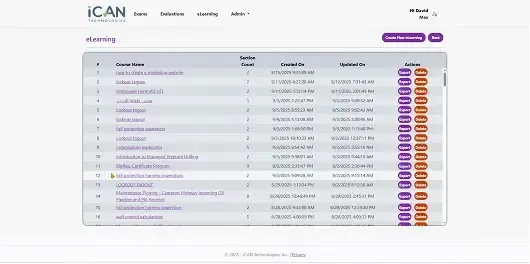
With iCAN’s LMS, teams can assign and track training, monitor certifications and expirations, and maintain connected audit trails across blended learning activities, including online courses, classroom learning, and on-the-job verification.
A competency management system adds visibility into skill results and development needs across individuals, teams, and roles.
Its heat maps and anonymized industry benchmarking can help leaders spot patterns and prioritize development without treating a workforce-readiness metric as a regulatory requirement.
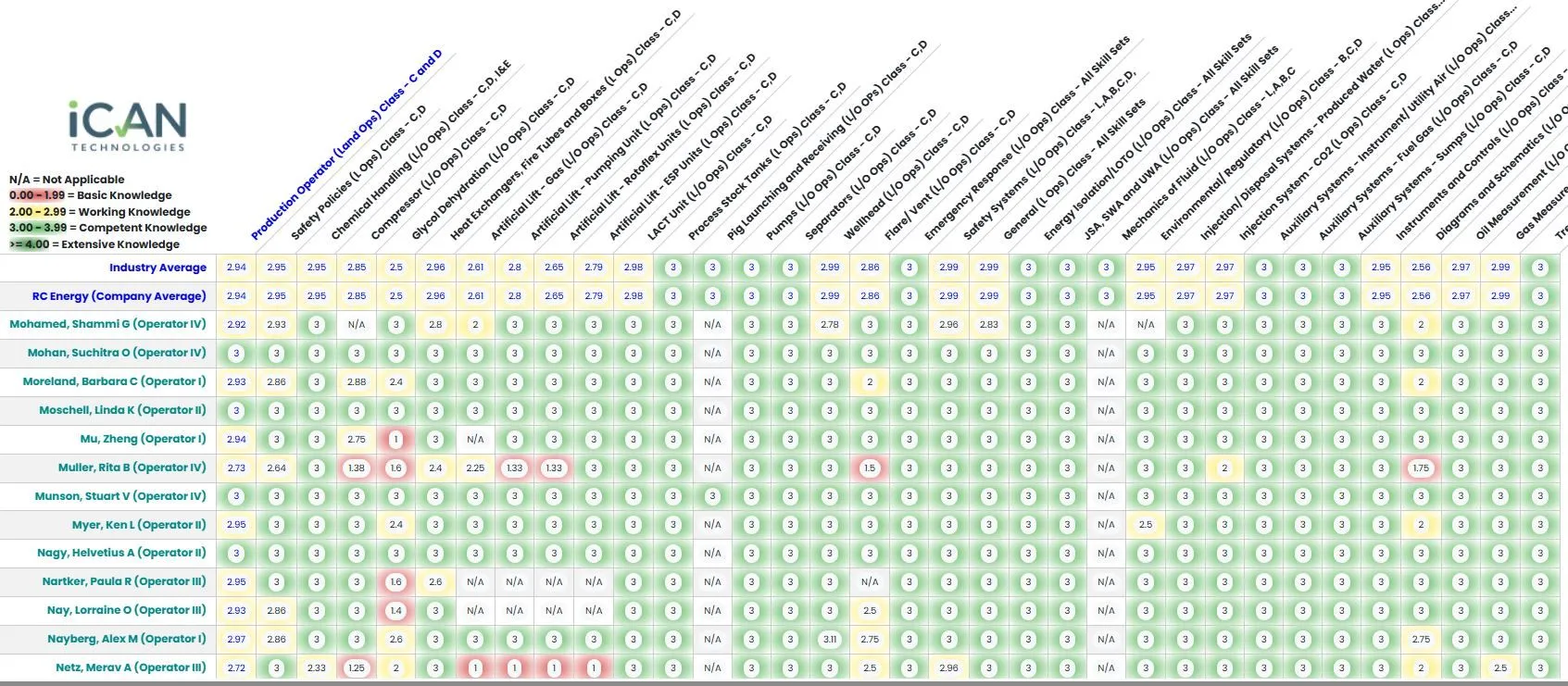
Software supports the process; it does not replace a sound training plan, qualified assessment, or clear ownership.
Test your audit trail before an auditor does
Run a small internal sample using the same basic question an auditor might ask: can the organization show why this person is ready for these duties?
Select an employee and a contractor, then trace each record from role and requirement through training, assessment, certification status, and any follow-up action.
Note how long it takes to produce the evidence, whether the records agree, and whether the responsible manager can explain the verification method.
For SEMS records, 30 CFR 250.1928 generally requires records and documents to be maintained for six years, subject to listed exceptions, and requires records to be orderly, identifiable, retrievable, legible, and revision-dated.
Apply your organization’s records schedule to determine the retention period for each record type.
One offshore operator moved from check-the-box training to a more defensible compliance model, and its BSEE inspection INC-to-component ratio ran 50% below the industry average.
That result is an example, not a promised outcome, but it shows why a clear record can support more than audit preparation.
FAQ: Training compliance management
What should a training compliance audit trail include?
It should connect the person and assigned duties to the training requirement, training activity, assessment or practical verification, result, evaluator, qualification status, and any follow-up action.
How quickly should an organization be able to answer a random auditor pull?
A well-organized process should let the responsible team retrieve a person’s relevant records promptly and explain how the evidence supports their assigned duties.
How long must offshore Subpart O training records be available?
Under 30 CFR 250.1503, operators must provide relevant training documentation for the past five years upon request, while applicable SEMS records are generally subject to a six-year retention period under 30 CFR 250.1928, with exceptions.
Who is responsible for tracking requalification dates?
The operator should assign a clear owner for tracking employee and contractor requirements, monitoring due dates, and resolving gaps before affected personnel perform covered duties.
How can competency management software support audit readiness?
It can connect role requirements with training, assessments, certification status, verification records, and development actions so teams can retrieve and explain evidence more consistently.
See how iCAN supports connected training records, compliance status tracking, and competency evidence across technical workforces.